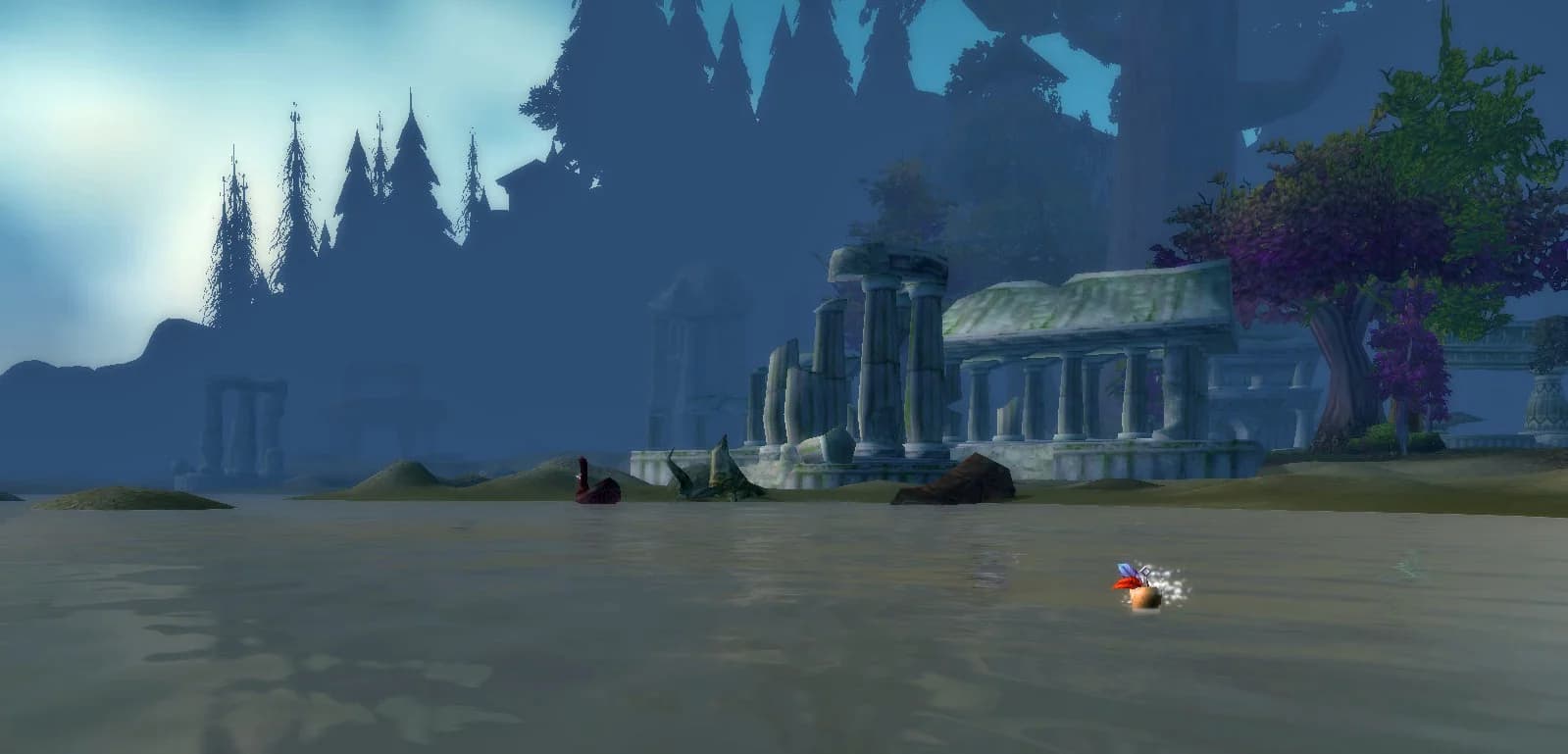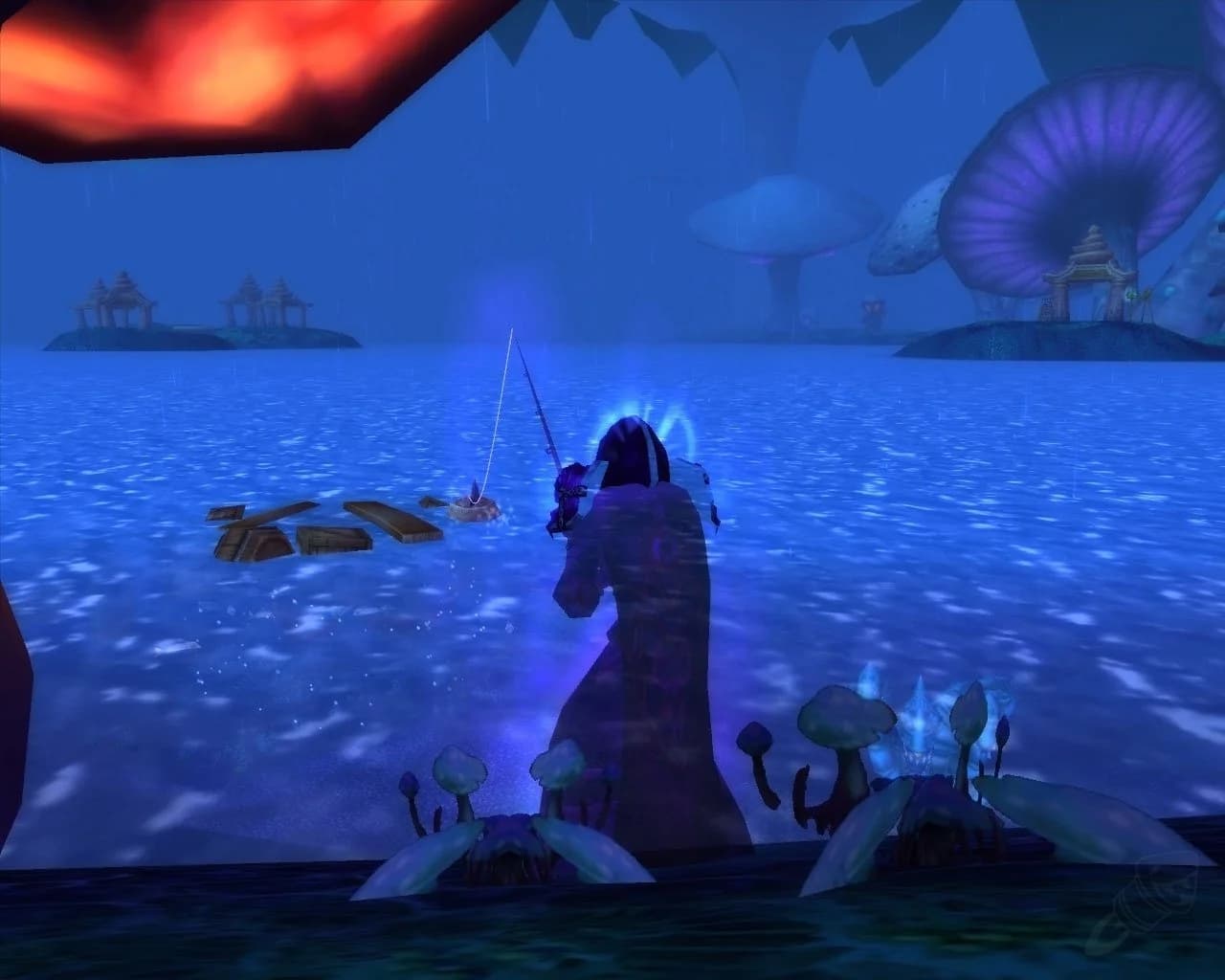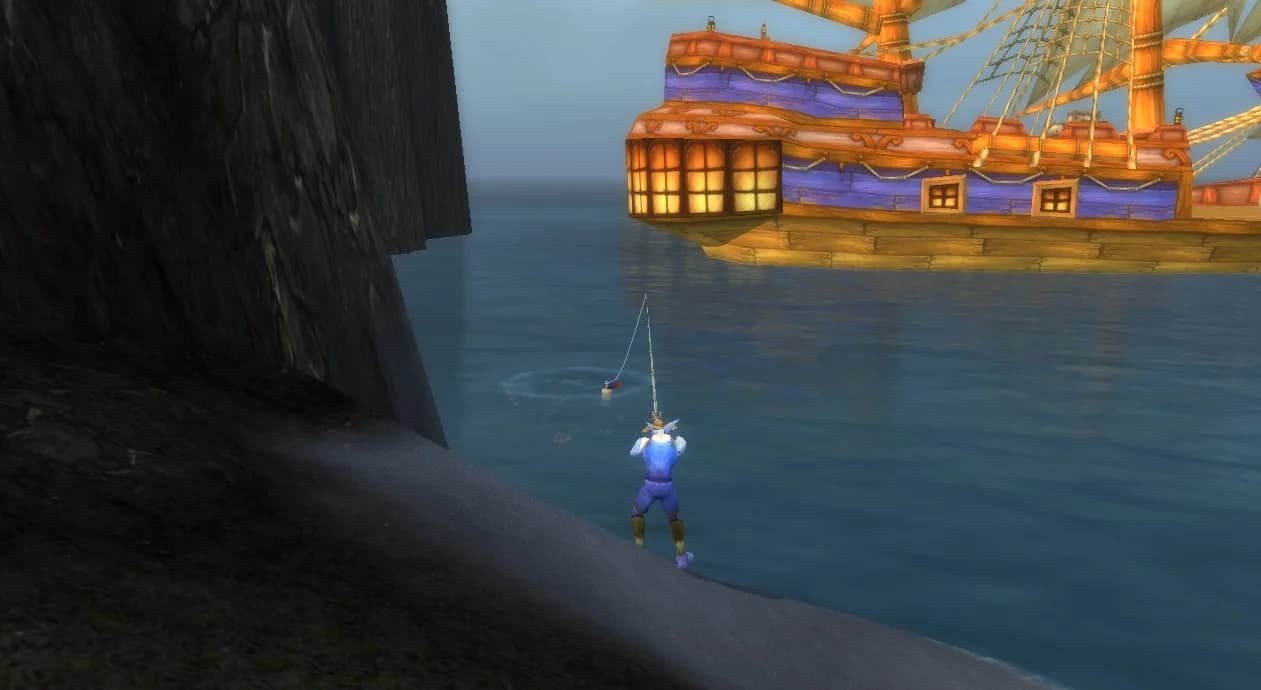
Modern WoW fishing bots are a far cry from the simple pixel-color scripts of a decade ago. Today's bots use the same AI and computer vision technology that powers self-driving cars, medical imaging, and industrial automation. But how exactly does a fishing bot "see" a bobber on screen, detect when a fish bites, and click at the right moment? In this article, we pull back the curtain on the technology behind modern fishing bots, explaining everything from object detection models to splash classification in terms that anyone can understand.
The Old Way: Pixel-Color Bots
To appreciate how far bot technology has come, it helps to understand how the older generation worked. Classic pixel-color fishing bots used a very simple approach:
- The player would manually position the bobber in a specific screen location.
- The bot would monitor a small group of pixels at that location.
- When the color of those pixels changed (indicating the bobber splashed), the bot would click.
This method had severe limitations:
- Fixed position required - The camera could not move at all. Any rotation, zoom, or character movement broke the bot.
- Lighting-sensitive - Different times of day, weather effects, or zones with unusual lighting would cause false positives or missed catches.
- Single-pixel fragility - If another player walked over the bobber, a particle effect triggered, or the water texture changed, the bot would fail.
- Easy to detect - The perfectly static camera and mechanical clicking patterns made these bots obvious to both players and anti-cheat systems.
Pixel-color bots worked well enough in controlled conditions, but they were unreliable in real gameplay scenarios. The next generation of bots needed a fundamentally different approach.
Enter Computer Vision: How AI "Sees" the Game
Computer vision is the field of AI that teaches machines to interpret visual information from images or video. Instead of checking a few pixel colors, a computer vision system analyzes an entire image to identify objects, their positions, and their states. This is the same technology that lets your phone recognize faces in photos or allows a Tesla to identify pedestrians on the road.
For a fishing bot, computer vision solves the core problem: finding the bobber anywhere on screen, under any lighting conditions, in any zone, regardless of camera angle. The bot does not need to know where the bobber "should" be. It looks at the whole screen and finds it, just like your eyes do.
YOLO Object Detection: Finding the Bobber
The specific AI architecture used by modern fishing bots like FishBot is called YOLO, which stands for You Only Look Once. YOLO is an object detection model originally developed for real-time applications like autonomous driving and security camera analysis. Here is how it works at a high level:
Step 1: Screenshot Capture
The bot takes a screenshot of the game window. This is a standard screen capture, the same as pressing Print Screen. The bot does not hook into the game's rendering pipeline or read video memory. It simply captures what is displayed on your monitor.
Step 2: Image Processing
The screenshot is resized and normalized into a format the AI model expects, typically a square image of 640x640 pixels. This preprocessing step ensures consistent input regardless of your monitor resolution or game window size.
Step 3: Neural Network Inference
The processed image is fed through a YOLO neural network. This network has been trained on thousands of labeled images of WoW fishing bobbers in various conditions: different zones, lighting, weather, water types, camera angles, and UI configurations. During training, a human annotator draws bounding boxes around bobbers in each image and labels them. The network learns to recognize the visual patterns that define a fishing bobber.
When the trained model processes a new screenshot, it outputs a list of detected objects, each with:
- Bounding box - The x, y coordinates and width/height of a rectangle around the detected bobber
- Confidence score - A percentage indicating how certain the model is that the detection is correct (for example, 0.95 means 95% confident)
- Class label - What the object is (in this case, "bobber")
Step 4: Bobber Tracking
Once the bobber is detected, the bot knows exactly where it is on screen. It tracks the bobber's position across multiple frames, which is important because the bobber subtly bobs up and down in the water. This tracking ensures the bot does not lose the bobber between screenshots.
Splash Detection: Knowing When to Click
Finding the bobber is only half the challenge. The bot also needs to know exactly when a fish bites, which is indicated by the bobber splashing and dipping below the water surface. There are two primary approaches to splash detection:
Approach 1: Visual Classification
A second AI model, typically a binary image classifier, is trained to look at a cropped image of the bobber area and classify it as either "idle" (bobber floating normally) or "splash" (fish on the line). This classifier is trained on thousands of examples of both states, learning to recognize the spray of water droplets, the downward motion of the bobber, and the ripple effects that indicate a bite.
| Detection Method | How It Works | Accuracy | Speed |
|---|---|---|---|
| Visual classifier (AI) | Crops bobber region, runs through a trained neural network | Very High (95%+) | Fast (10-30ms) |
| Sound detection | Monitors game audio for the splash sound effect | High (90%+) | Very Fast (instant) |
| Pixel-color change | Monitors color shift in bobber area | Medium (70-85%) | Very Fast (instant) |
| Template matching | Compares bobber area to reference splash images | Medium (75-85%) | Moderate (50-100ms) |
Modern bots often combine multiple approaches for maximum reliability. For example, using the visual classifier as the primary method with sound detection as a backup ensures catches are rarely missed.
Approach 2: Motion Analysis
Instead of classifying each frame independently, some implementations analyze the change between consecutive frames. When the bobber is idle, the frames in the bobber region look very similar. When a fish bites, there is a sudden burst of visual change: water splashing, the bobber dipping, particle effects appearing. By measuring the magnitude of change between frames, the bot can detect the splash without a dedicated classifier.
Why This Approach Is "External"
One of the most important distinctions about AI-powered fishing bots is that they operate entirely externally to the game. This means:
- No memory reading - The bot never accesses WoW's process memory. It does not read object positions, player coordinates, or internal game state. It only looks at what is on screen.
- No code injection - Nothing is injected into the WoW executable. No DLLs are loaded into the game process, no hooks are placed on game functions.
- No file modification - Game files, addons, and configuration are not touched. The game runs completely stock.
- Input simulation - The bot sends standard mouse clicks and keyboard inputs through the operating system, the same type of input that any keyboard macro or accessibility tool would send.
The Training Pipeline
Building an accurate detection model requires a substantial training pipeline. Here is what that looks like for a fishing bot:
- Data collection - Thousands of screenshots are captured across dozens of zones, times of day, weather conditions, and UI setups. Both idle bobber and splash states are captured.
- Annotation - Each screenshot is manually labeled. For object detection, this means drawing bounding boxes around every bobber. For splash classification, each cropped bobber image is labeled as "idle" or "splash."
- Training - The annotated dataset is fed into the YOLO training pipeline. The model trains for hundreds of epochs, gradually learning to recognize bobbers and their states.
- Validation - A held-out test set of images the model has never seen is used to measure accuracy. A good model achieves 95%+ accuracy on bobber detection and splash classification.
- Deployment - The trained model is exported in an optimized format (like ONNX) for fast inference on end-user hardware.
Old Bots vs. AI Bots: A Comparison
| Feature | Pixel-Color Bot | AI/Computer Vision Bot |
|---|---|---|
| Bobber finding | Manual positioning required | Automatic detection anywhere on screen |
| Camera flexibility | Must be static | Any angle, zoom, or rotation |
| Zone compatibility | Needs recalibration per zone | Works in any zone with any lighting |
| Weather/time-of-day | Often breaks | Handles all conditions |
| Detection accuracy | 70-85% | 95%+ |
| Setup complexity | Moderate (manual calibration) | Low (just start fishing) |
| Game memory access | Sometimes used | Never needed |
| Resilience to UI changes | Very fragile | Highly resilient |
FishBot uses YOLOv11 computer vision for bobber detection, fast, accurate, and fully external.
Download Now →
The Future of Bot AI
Computer vision technology continues to advance rapidly. Future improvements in fishing bot AI could include real-time video analysis instead of screenshot-based detection, transformer-based architectures that understand temporal context across frames, and on-device training that lets the model adapt to new zones or expansions without requiring a manual update. The gap between AI perception and human perception is closing, and fishing bots are a surprisingly good demonstration of that progress.
Whether you find this technology fascinating or concerning, understanding how it works gives you a more informed perspective on the state of gaming automation. The days of fragile pixel-color scripts are over. Modern bots see the game the way you do, and they are only getting better at it.
// TOPICS
// TRY_FISHBOT
Ready to Put This
Into Practice?
Try FishBot free, in unlimited 30 minute sessions. Automate your WoW fishing and start earning gold effortlessly.