If you have ever looked into WoW bots, you have probably noticed that not all bots work the same way. Some read your screen like a human would. Others dig into the game's memory to extract data directly. And some go even further, injecting code into the WoW client itself. These three approaches, pixel bots, memory reading bots, and injection bots, represent fundamentally different philosophies of automation, and the type you choose has a massive impact on your risk of getting caught.
The Three Types of WoW Bots
Every WoW bot falls into one of three categories based on how it interacts with the game. Think of it as a spectrum from least invasive to most invasive:
| Bot Type | How It Works | Detection Risk | Capability |
|---|---|---|---|
| Pixel / Screen-Reading | Reads screen pixels and simulates keyboard/mouse input | Lowest | Limited to what you can see on screen |
| Memory Reading | Reads WoW.exe memory addresses to extract game data | Medium | Access to hidden game data (coordinates, health, etc.) |
| Injection / DLL | Injects code directly into the WoW process | Highest | Full control, can call game functions directly |
Let us break down each one in detail so you understand exactly what is happening under the hood and why it matters for your account safety.
Pixel Bots: The External Observer
A pixel bot works entirely outside of the WoW client. It never touches the game's memory, never reads its process, and never injects anything. Instead, it does exactly what a human player does: it looks at the screen and presses keys.
Here is what a pixel bot actually does at a technical level:
- Screen capture - Takes screenshots or reads specific pixel colors from the monitor output
- Image analysis - Uses color detection, pattern matching, or basic computer vision to interpret what is happening on screen
- Input simulation - Sends keyboard presses and mouse clicks through the operating system, exactly like a human would
From Blizzard's perspective, a pixel bot is nearly invisible. Warden, Blizzard's anti-cheat system, primarily works by scanning the WoW process for unauthorized modifications, reading loaded DLLs, and checking memory for known cheat signatures. A pixel bot triggers none of these checks because it never interacts with the WoW process at all. It is just another program running on your computer, no different from a web browser or music player.
Pixel Bot Strengths
- Undetectable by Warden - No memory access, no DLL injection, no process hooks. Warden has nothing to scan.
- Patch-proof - Since pixel bots do not rely on memory addresses, they rarely break after game updates. A minor UI change might require a tweak, but the core approach stays the same.
- Simple architecture - Less code complexity means fewer bugs and fewer crash-related suspicion flags.
Pixel Bot Limitations
- Limited information - Can only "see" what is visible on screen. Cannot read exact health values, map coordinates, or hidden game state.
- Screen dependency - Requires the WoW window to be visible and at a specific resolution. You cannot minimize the game or run it in the background.
- Slower reaction - Screen reading and image analysis introduce slight delays compared to direct memory access.
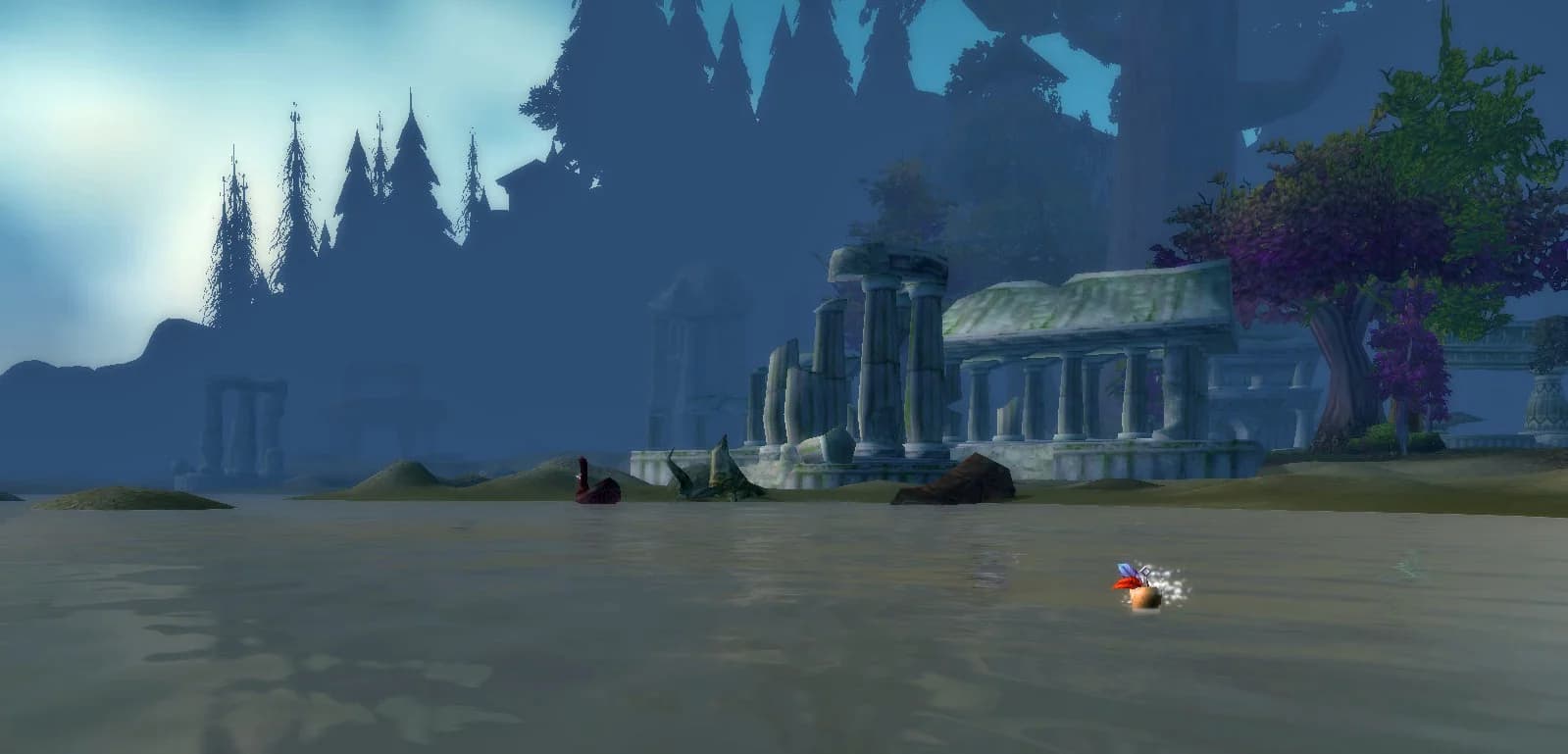
For fishing bots specifically, pixel-based detection is ideal. Fishing only requires watching for a bobber splash and pressing a key, exactly the kind of simple, screen-visible task that pixel bots handle perfectly. There is no need to read memory addresses or inject code just to detect a bobber animation.
Memory Reading Bots: The Data Miner
Memory reading bots take a more invasive approach. Instead of looking at the screen, they read data directly from WoW's process memory. This means they can access information that is never displayed on screen, exact player coordinates, mob health percentages, nearby player positions, loot tables, and more.
Here is how a memory reader works:
- Process attachment - The bot opens a handle to the WoW.exe process using operating system APIs like
ReadProcessMemory - Address scanning - It locates specific memory addresses where the game stores data (player health, position, target info, etc.)
- Data extraction - It continuously reads those memory locations to understand the game state in real time
- Input simulation - Like pixel bots, it sends keyboard and mouse input through the OS
The critical difference is step one: opening a handle to the WoW process. This is exactly the kind of behavior that Warden is designed to detect.
How Warden Catches Memory Readers
Warden actively monitors which external processes have open handles to WoW.exe. It can enumerate running processes, check which ones are reading WoW's memory, and even scan those processes for known bot signatures. Specifically:
- Handle detection - Warden can see that another process has opened a read handle to WoW's memory space
- Module scanning - Warden checks loaded modules and DLLs against a database of known cheat tool signatures
- Heuristic analysis - Patterns of memory access (which addresses, how frequently) can flag suspicious behavior
Memory Reader Strengths
- Rich data access - Can read player position, health, mana, nearby entities, bag contents, and much more
- No screen dependency - Works even if the WoW window is minimized or obscured
- Faster decision-making - Direct data access means instant reaction times
Memory Reader Risks
- Detectable by Warden - The act of reading WoW's memory is itself a red flag that anti-cheat can identify
- Breaks after patches - Memory addresses change with every game update, requiring constant maintenance
- Signature risk - If Warden adds the bot's executable to its signature database, every user running that bot gets flagged simultaneously
Injection Bots: The Insider
Injection bots are the most powerful, and the most dangerous. They work by injecting a DLL (Dynamic Link Library) directly into the WoW.exe process. Once inside, the injected code can call game functions directly, hook into internal routines, and manipulate the client from within.
This is how the most notorious bots in WoW history operated. Honorbuddy, Glider, and most "rotation bots" used injection to achieve things that would be impossible from the outside:
- Calling game functions - Directly invoking movement, combat, and interaction functions without simulating input
- LUA unlocking - Bypassing Blizzard's restrictions on which LUA functions addons can call, enabling fully automated combat rotations
- Teleportation and speed hacks - Modifying position data in memory to move characters instantly
- Full automation - Questing, dungeon grinding, PvP, and more with superhuman precision
Why Injection Bots Are So Dangerous
Injection is the easiest type of bot for Warden to detect, and it is not even close. When code is injected into WoW.exe, Warden can see it through multiple detection vectors:
| Detection Method | What Warden Checks |
|---|---|
| DLL enumeration | Scans all loaded DLLs in the WoW process against known signatures |
| Code integrity checks | Verifies that game code has not been modified or hooked by external code |
| Stack analysis | Checks call stacks to see if game functions are being called from unauthorized code |
| Memory scanning | Searches for known byte patterns of popular injection tools inside the process |
The history of WoW botting is littered with massive ban waves targeting injection bots. Honorbuddy users faced a wave that caught thousands of accounts in a single day. Glider was sued for 6 million dollars and shut down entirely. Every major injection bot has eventually been detected, and the bans typically come in waves, meaning Blizzard often knows about the bot for weeks or months before acting, catching everyone at once.
Head-to-Head Comparison
| Factor | Pixel Bot | Memory Reader | Injection Bot |
|---|---|---|---|
| Touches WoW process? | No | Yes (reads memory) | Yes (injects code) |
| Detectable by Warden? | Not directly | Yes | Easily |
| Survives patches? | Usually | Needs address updates | Needs address updates |
| Feature power | Basic (screen-visible only) | Advanced (all game data) | Full (total control) |
| Best for | Fishing, simple farming | Gathering, auction house | Combat rotations, questing |
| Historical ban rate | Very low | Moderate | High (mass ban waves) |
| Legal risk | ToS violation | ToS violation | ToS violation + potential DMCA issues |
FishBot is a pixel bot, the safest type. No process attachment, no detection footprint.
Download Now →
Why Pixel Bots Are the Safest Choice for Fishing
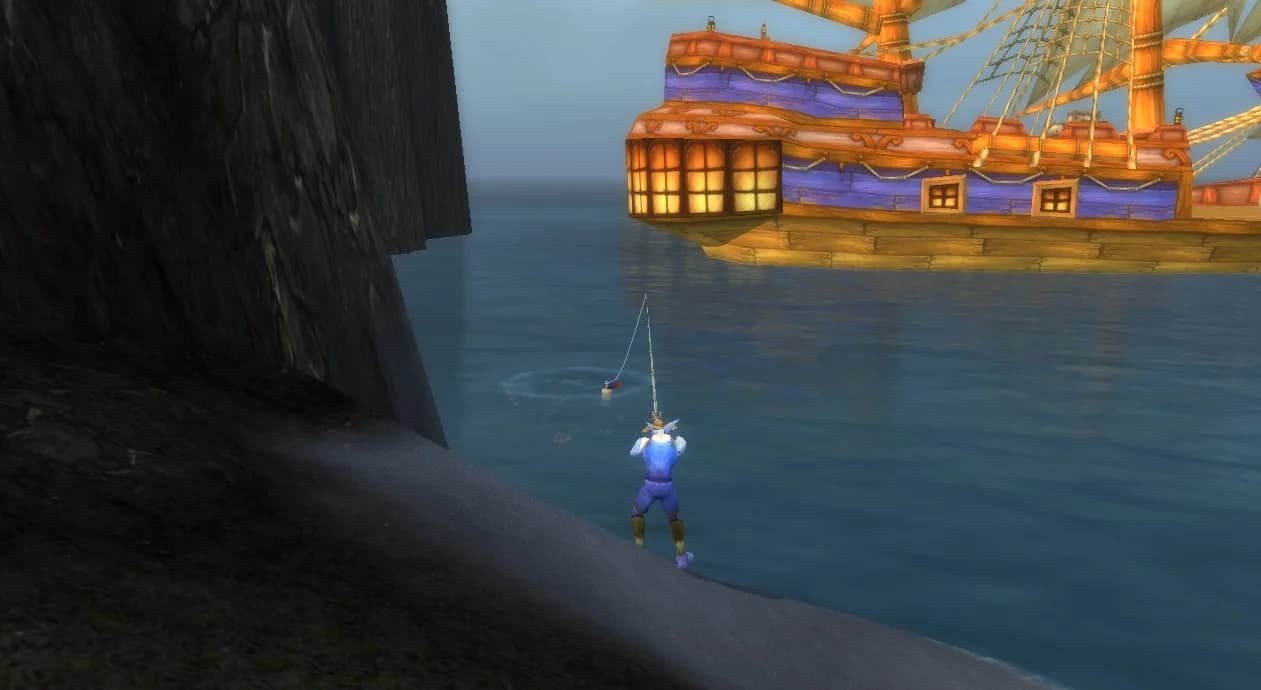
Fishing in WoW is a uniquely simple activity. You cast a line, wait for the bobber to splash, and click it. That entire loop, cast, wait, detect splash, click, can be done perfectly with nothing more than screen reading and keyboard input. There is zero need to read memory or inject code.
This is why pixel-based fishing bots have the best safety track record in the WoW botting community. The math is straightforward:
- Less invasive = less detectable. A pixel bot gives Warden nothing to scan, no handles to flag, and no injected code to find.
- Simpler = more stable. Fewer moving parts means fewer crashes, fewer error states, and fewer behavioral anomalies that could trigger pattern analysis.
- External = patch-proof. When Blizzard pushes a patch, memory addresses shift and injection hooks break. Pixel bots just keep working because the screen still looks the same.
The trade-off is that pixel bots cannot do everything. You will not find a pixel bot running full dungeon clears or executing 30-button combat rotations. But for fishing? Pixel detection is not just sufficient, it is the optimal approach. You get everything you need with the absolute minimum detection footprint.
What About Behavioral Detection?
It is worth noting that the bot type only protects you from technical detection, Warden scanning your process and memory. Blizzard also uses behavioral analysis to flag bots, and this applies equally to all three bot types.
Behavioral detection looks at patterns like:
- Session length - Fishing for 16 hours straight without a break
- Timing regularity - Clicking the bobber at exactly the same speed every single time
- Movement patterns - Standing in the exact same spot for days
- Player reports - Other players reporting you as a bot
No matter what type of bot you use, you still need to practice safe automation habits like reasonable session lengths, varied timing, and occasional location changes. The bot type determines whether Warden can catch you through process scanning. Your behavior determines whether Blizzard's analytics catch you through pattern analysis.
"The best bot is one that is invisible to both the software and the humans. A pixel bot handles the software side. Smart habits handle the human side."
The Bottom Line
Choosing a bot type is the single most important safety decision you will make. Here is the simple version:
- If you want to fish safely - Use a pixel bot. It is the only type that gives Warden nothing to detect, and fishing is the perfect use case for screen-based automation.
- If you need advanced features - Memory readers offer more data at moderate risk. Understand that you are trading safety for capability.
- If you want full automation - Injection bots can do everything, but the history of mass ban waves speaks for itself. The power comes at a steep price.
For fishing specifically, there is no reason to take on extra risk. A pixel bot does the job perfectly, stays invisible to Warden, survives game patches, and keeps your account as safe as possible. Pair it with an understanding of how Blizzard detects bots and smart session management, and you have the lowest-risk automation setup available in WoW today.
// TOPICS
// TRY_FISHBOT
Ready to Put This
Into Practice?
Try FishBot free, in unlimited 30 minute sessions. Automate your WoW fishing and start earning gold effortlessly.